


2026/6/8 13:54:04
Major Milestone: Affinity’s Legubicin for Injection Granted FDA Orphan Drug Designation, Ushering in a New Chapter for Soft Tissue Sarcoma Treatment
At the 2026 Annual Meeting of the American Association for Cancer Research (AACR), Affinity officially introduced its three novel anti-tumor immunotherapeutic molecules based on its globally first-in-class chemically conjugated masked IL-2 platform: IMD101 (IL-2), IMD2032 (PD1-IL2), and IMD2035 (PD1-VEGFA-IL2).
Affinity’s proprietary technology platform for chemically conjugated masked and tumor microenvironment (TME)-activated cytokines utilizes a steric shielding strategy via chemical conjugation. The masking moiety has no affinity for the masked region, enabling rapid dissociation to restore the cytokine’s weak binding affinity to its receptor. Triggered by the tumor extracellular enzyme Legumain in the tumor microenvironment, the linker conjugated to the cytokine is cleaved, allowing the biologic molecule to be activated specifically in the TME. This mechanism avoids systemic toxicity caused by cytokine activity outside the tumor microenvironment.
Affinity leverages its globally unique technology of chemically conjugated masking and tumor microenvironment (TME)-activated cytokine restoration to address the toxicity challenges of IL-2 and IL-2-containing fusion molecules, demonstrating potential to overcome PD-1 resistance and meet unmet clinical needs. Compared to competing products, the differentiated advantage of these three anti-tumor immunotherapeutic molecules lies in their use of chemical conjugation masking technology after selecting appropriate fusion partners, thereby reducing peripheral toxicity and enabling safe combination with other immunotherapies.
IMD101 is a chemically conjugated fully masked wild-type IL-2. The masked wild-type IL-2 exhibits no biological activity, which can be fully restored upon cleavage by Legumain. Initial Phase I dose-escalation data have demonstrated encouraging safety and efficacy signals.
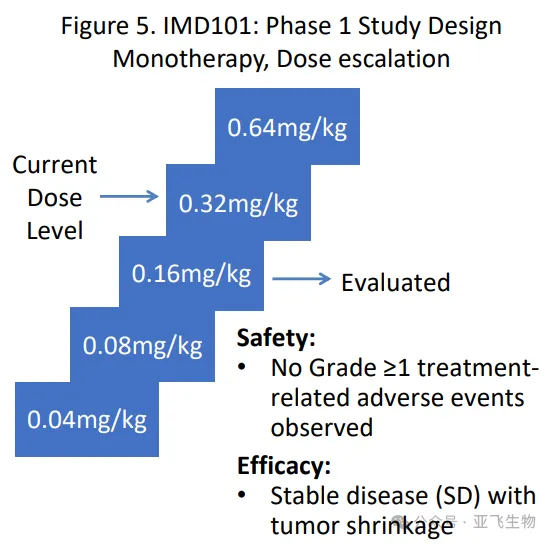
· The ongoing dose escalation of IMD101 has reached 0.32 mg/kg, nearly 10 times higher than the dose of the marketed IL-2 drug (0.037 mg/kg), and the escalation is still in progress.
· In all enrolled subjects, no Grade ≥1 treatment-related adverse events (TRAEs) have been observed, confirming the product’s favorable tolerability.
· At the 0.16 mg/kg dose level, the first tumor assessment in a single subject showed preliminary disease stabilization (SD), accompanied by efficacy signals of reduction in all metastatic lesions.
IMD2032 is a fully masked, chemically conjugated fusion molecule of PD-1 and wild-type IL-2. It is activated in the tumor microenvironment to act as a potent IL-2 synergist for PD-1 therapy. Preclinically, IMD2032 demonstrated superior efficacy and safety profiles compared to PD1-IL2α-biased molecules.
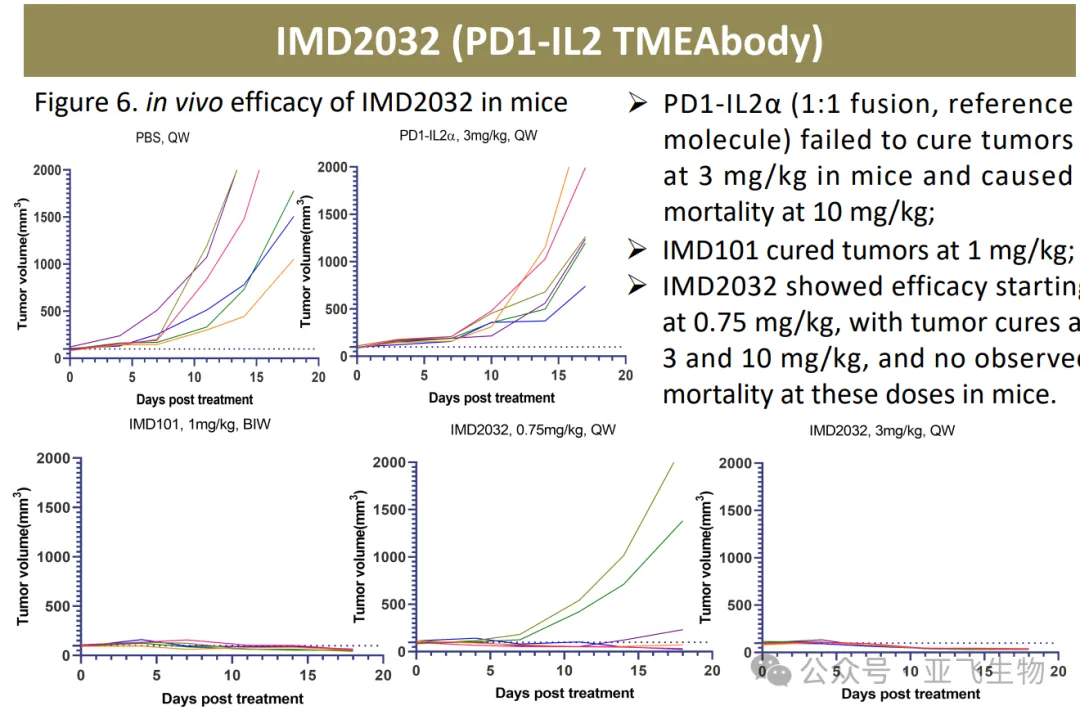
· Control treatment with PD1-IL2α-biased molecule: No tumor cure at 3 mg/kg; no efficacy at low doses; mouse death observed at 10 mg/kg.
· IMD101: Complete tumor cure achieved at 1 mg/kg.
· IMD2032: Efficacy observed starting at 0.75 mg/kg; complete tumor cure achieved at both 3 mg/kg and 10 mg/kg dose groups, with no toxicity-related deaths.
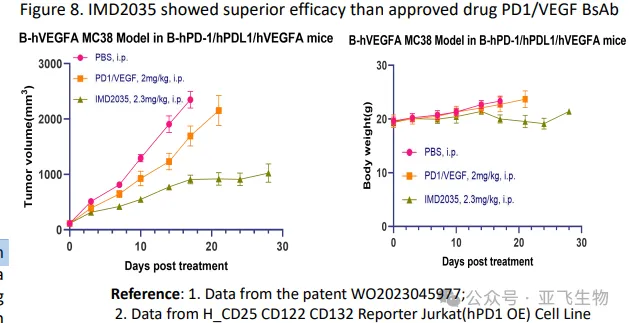
IMD2035 is a chemically conjugated, single-masked PD1-VEGFR-IL2α fusion molecule, with masking targeted at the IL-2α domain. Preclinical data demonstrate that while retaining the bispecific functions of PD-1/VEGF, IMD2035 achieves precise masking of the IL-2α-biased moiety and exhibits enhanced efficacy superior to PD-1/VEGF bispecific antibodies.
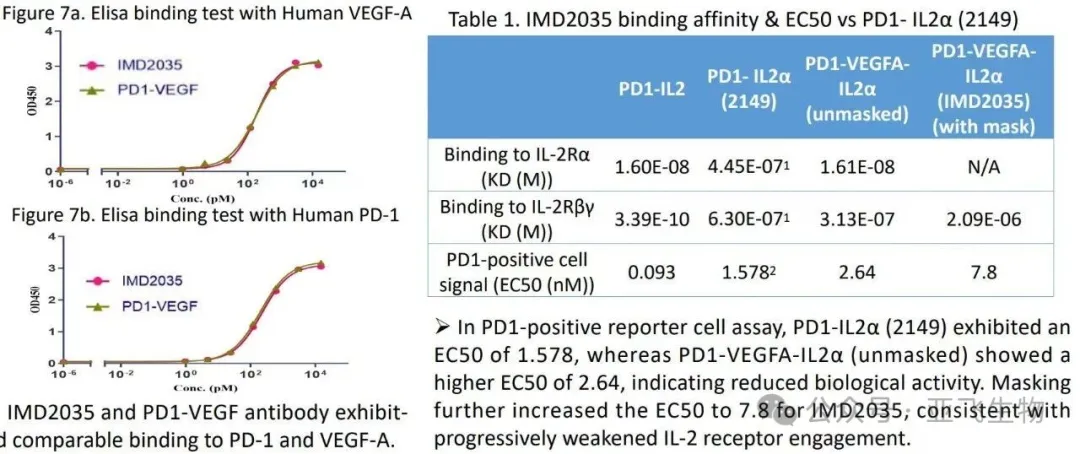
· Functional validation: Chemical conjugation and masking of IMD2035 do not affect its binding activity to PD-1 and VEGF-A, showing performance comparable to the reference bispecific antibody, with full retention of bispecific functions.
· Efficacy breakthrough: In in vivo models, IMD2035 demonstrated superior anti-tumor activity relative to marketed PD-1/VEGF bispecific antibodies.
· The binding affinity of the IL-2α moiety in PD1-VEGFA-IL2α is slightly enhanced compared to the reference molecule PD1-IL2α(2149), but its activity is significantly reduced following chemical conjugation and masking. This design is intended to enable clinical administration at doses higher than those feasible for PD1-IL2α(2149), meeting the high-dose requirement of this triple therapy for optimal anti-angiogenic effects.
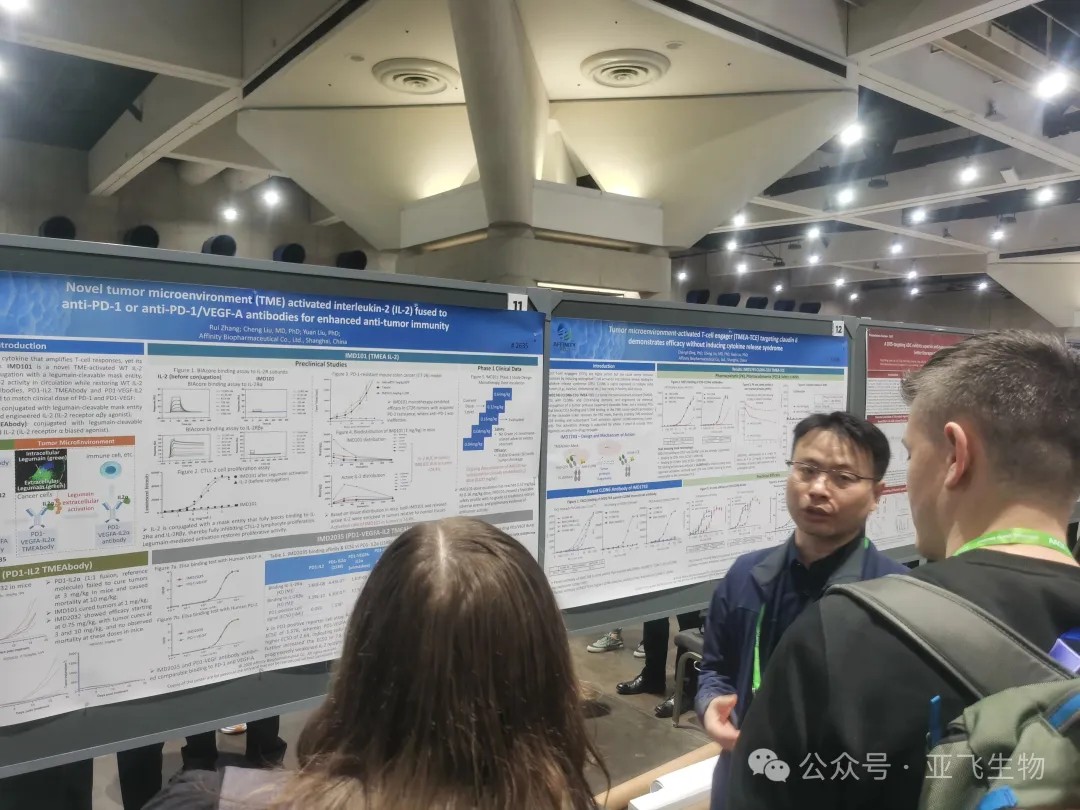
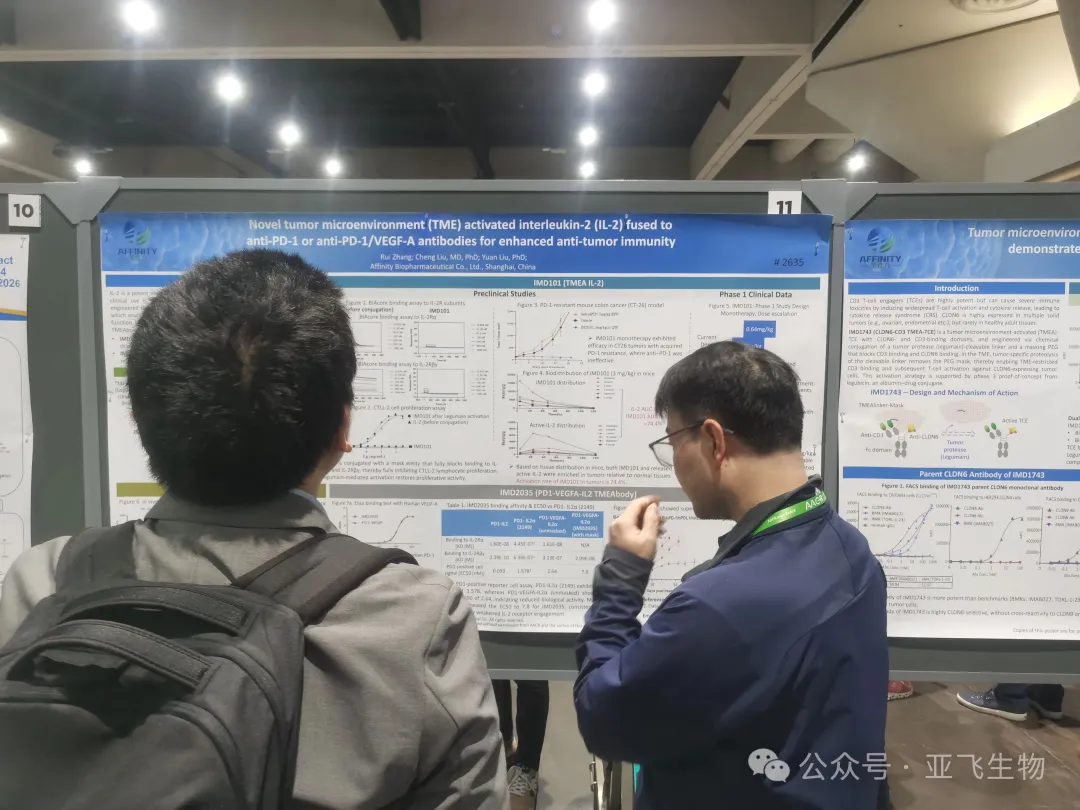
About IMD101/IMD2032/IMD2035
IMD101 is a novel tumor microenvironment (TME)-activated wild-type IL-2. It is engineered via chemical conjugation with a Legumain-cleavable linker and a masking moiety. This design fully suppresses IL-2 activity in systemic circulation, while restoring the biological function of wild-type IL-2 specifically within the tumor microenvironment.
IMD2032 (PD1-IL2 TMEABody) employs Legumain-cleavable linkers and masking moieties to fully mask both the PD-1 antibody and wild-type IL-2, enabling tumor microenvironment-specific activation of potent PD1-IL2 immunotherapy.
IMD2035 (PD1-VEGFA-IL2 TMEABody) also utilizes Legumain-cleavable linkers and masking moieties. It selectively blocks the activity of the biased-engineered IL-2 (an IL-2 receptor α-biased agonist), restoring the attenuated IL-2 moiety of the fusion molecule in the tumor microenvironment. This design enables high-dose administration of the fusion molecule, meeting the high-dose requirement for VEGF-A-mediated anti-angiogenic effects.
About the American Association for Cancer Research (AACR)
The AACR Annual Meeting is a premier global platform for advancing cancer research. Scientists, clinicians, healthcare providers, cancer survivors, patients, and advocates convene annually to share cutting edge breakthroughs. The congress spans population science, prevention, cancer biology, translational and clinical research, survivor care, and patient advocacy, showcasing the full spectrum of innovative cancer science and medicine.
About Affinity (Shanghai) Biopharmaceutical Co., Ltd. ("Affinity")
Leveraging its globally first-in-class and proprietary Tumor Microenvironment-Activated (TMEA) technology platform, Affinity develops and advances highly selective, low-toxicity innovative anti-cancer drugs. The company is dedicated to solving the toxicity challenges of traditional chemotherapy and targeted therapies, focusing on unmet medical needs in oncology, with the potential to transform traditional treatment approaches and reshape the cancer care paradigm.
Looking ahead, Affinity aims to become a fully integrated biopharmaceutical company with robust manufacturing and commercialization capabilities.
Forward-Looking Statements Disclaimer
This article is provided solely for the purpose of sharing the Company’s recent R&D progress and related academic information. The research results, data and assessments contained herein are based on the Company’s current understanding and publicly available information, and remain subject to change in light of further R&D progress, data updates, market conditions or other relevant factors. Although the Company has exercised reasonable care in preparing this article, nothing herein shall constitute any commitment, representation, warranty, recommendation or advice, and all information shall be subject to the Company’s official disclosures. Unless required by applicable laws, regulations or regulatory rules, the Company undertakes no obligation to update, revise or supplement any content herein.